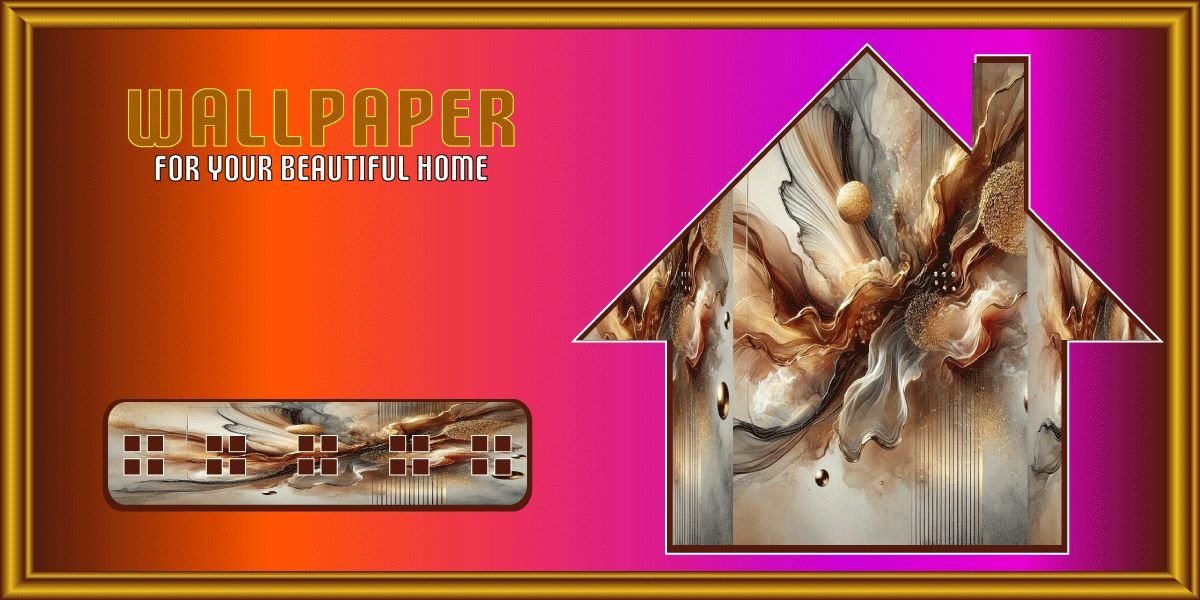
Wallpaper is a great way to instantly enhance the walls of any room. It instantly gives them a beautiful, stylish, and impressive look. It is a popular and elegant choice.
Due to its premium look, it is a favorite choice in modern home decor. It is a beautiful way to enhance your beautiful walls even more.
It is also a great way to use it as an accent wall, making the entire home look attractive and beautiful.
It is a beautiful element of home decor that can give any ordinary wall an attractive and premium look in minutes.
Introduction
It comes in countless patterns, colors, designs, and textures, giving every space a unique identity.
It is available in various patterns, textures, colors, and designs, allowing you to give each room a unique theme and personality.
It’s available in various types, including PVC vinyl, non-woven, 3D, fabric-based, and textured. Non-woven is ideal for bedrooms and living rooms, as it doesn’t damage walls.
3D creates a realistic ambiance and enhances home decor. Textured finishes mimic brick, stone, wood, and plaster, creating a stylish look.
PVC is best used in kitchens and high-traffic areas because it’s water-resistant and easy to clean. It can also beautifully decorate living rooms, bedrooms, kids’ rooms, and dining areas.
It easily conceals minor wall imperfections and, with proper installation, lasts for many years. It’s easy to install and long-lasting, making it a popular choice in home decor.
It plays a vital role in giving any room a new identity. It creates an open feel in small rooms and enhances the impact of larger spaces. It’s a smart and effective approach to home decor.
It creates a bold and dark effect in large rooms, while adding beauty to smaller rooms with light and subtle designs.
Importance
High-quality wallpapers are easy to clean and offer a stunning look with low maintenance, while adding a touch of elegance to your home’s decor.
Whether you prefer simplicity or a bold and eye-catching design, this is the right choice for you. It’s available to suit all tastes. It gives walls a clean, smooth, and premium look.
Vinyl and washable wallpapers are used in kitchens and children’s rooms; they completely transform a room in minutes and are easy to clean.
Some high-quality wallpapers on the market are also UV-resistant and fire-resistant, providing durability and protection.
They give each room a unique atmosphere and theme. With their varied patterns and colors, they transform the atmosphere of any room.
Their attractive and stylish look enhances the beauty of home decor. Washable, learning-based, and playful-themed wallpapers are best for children’s rooms.
Light colors are best for smaller rooms, while bold and dark designs create a great impact in larger rooms.
It easily hides minor wall imperfections, such as small cracks, patches, and uneven surfaces.
Wallpaper has some limitations, such as its durability in high-humidity areas, so it should be kept away from humid areas.
Premium designs are a bit more expensive, but their beauty, longevity, and instant makeover effect are also a plus. With the right design, color, and proper installation, they can give your home a stunning, stylish, and attractive look.
Installation is easy, but it’s important to ensure the wall is completely dry, clean, and flat. Otherwise, bubbles and wrinkles may form, making it less durable.
After applying the paste, carefully adjust the strips from top to bottom, and press the edges firmly to ensure a firm adherence. Maintenance is also easy; you can clean them with a damp cloth.
Known for their unique designs, patterns, and textures, they add a refreshing touch to any home.
Stylish, long-lasting and easy to maintain, there are many options available, including 3D wallpaper, textured wallpaper, and washable wallpaper, which can be easily applied to any area of the home, enhancing the beauty of your decor.
Why is wallpaper used?
They add beauty to home decor, instantly giving your walls a beautiful, stylish, and contemporary look. They conceal imperfections, cracks and stains, making your walls appear more attractive, stylish, and modern.
They add theme, ambiance, and identity to rooms. There are several reasons to consider them.
1. Gives your walls a beautiful, stylish, and sophisticated look
2. Conceals imperfections, cracks, and stains on your walls
3. Premium, royal feel, and a modern look
4. Gives different rooms different themes and personalities
5. Makes small rooms appear larger
6. Long-lasting durability of 7–12 years
7. Countless variety of designs, patterns, and textures
8. Easy installation
9. Easy cleaning
10. Adds depth and richness to walls with stylish textures
11. Creates a luxurious feel
12. Creates a focal point by creating an accent wall
13. Creates a playful and colorful atmosphere in children’s rooms
14. Prevents moisture and odors
15. Instant makeover
16. Makes color balancing easier with your furniture and decor
16. Instantly make an old house look new
17. Enhance your home’s beauty on a budget
18. Create a cozy atmosphere
19. Customized designs
How to Choose the Right Wallpaper?
Choosing the right wallpaper is essential to enhance the beauty of your home’s decor. It can completely transform the interior. A wrong choice can make your home appear dull. Therefore, when choosing wallpaper, it’s important to keep a few things in mind:
1. Consider the size of all the rooms in the house
Wallpaper should be selected based on the size of the house.
Large rooms should use bold and dark colors, while smaller rooms should use light colors and small patterns, which makes the space appear larger and more spacious.
2. Consider the lighting in your home
When choosing wallpaper, you should also consider the lighting in your home.
Consider the amount of sunlight and the amount of lighting in the house, whether it’s too much or too little.
Consider these factors and choose wallpaper based on the lighting.
Dark wallpapers look good in rooms with a lot of light, while light shades and reflective wallpapers are better for dimly lit rooms. Use glossy wallpapers; they reflect light, making the room appear brighter.
3. Understand the use of the rooms in the house
Modern, textured, or 3D designs should be used in the living room, soft, calm and soothing designs in the bedroom, washable vinyl wallpapers in the kitchen and bathroom areas and playful and learning designs in the children’s room.
4. Choose an accent wall in each room of the house
One wall in the room should be highlighted and other walls should be kept simple.
Highlight a wall according to each room.
5. Match the furniture and decor of the house
We should choose wallpapers with colors and patterns that match the furniture and decor of our home.
6. Choosing Textured and Smooth Wallpapers for Home Decor
Textured wallpapers add depth to your home and hide imperfections, while smooth wallpapers offer a clean and modern look.
7. Consider the Moisture Level in Your Rooms
Wallpapers that wear out quickly in humid rooms, such as non-woven and peel-and-stick wallpapers.
Choose PVC and vinyl washable wallpapers for humid rooms.
8. Long-Term or Changeable to Your Mood
If you like to change your look frequently, choose removable peel-and-stick wallpapers.
Use non-woven and vinyl for long-term use.
9. Choosing Patterns for Your Home
You can use horizontal patterns, vertical patterns, large patterns, and small patterns based on the dimensions of your home.
For example, horizontal patterns can make a room appear wider, vertical patterns can make a room appear taller, large patterns can be used for larger rooms and small patterns can be used for smaller rooms.
10. Decide on Your Home Budget
Wallpapers are available in the market to suit your budget. They range from low to high prices.
You can choose wallpapers that fit your budget. Determine the right budget based on the size and quality of your home.
11. Maintenance is also important
If you have children, choose washable wallpaper and choose scratch-resistant wallpaper in high-traffic areas like the entry, hallway and living area.
12. Check Installation Quality
Choosing the right wallpaper is important, but it’s also important to note that proper installation is just as crucial.
13. Decide on Wallpaper Colors
You also need to consider wallpaper colors.
Blue offers comfort, green offers freshness, yellow offers energy, gray/beige offers modernity and elegance, black/charcoal offers luxury and depth and pink offers softness.
14 Perfect Combinations of Multiple Patterns and Repeat Patterns
For a beautifully balanced look, bold wallpaper should be applied to the main wall and light or plain wallpapers to the other sides.
You should also note that some wallpapers have repeating designs.
Large repeat patterns look better in larger rooms, while smaller repeats look more consistent in smaller rooms.
Installation
1. Repair Cracks and Holes in the Wall
If there are cracks or small holes in your wall, fill them with putty and lightly sand them.
You should do this because wallpaper bubbles on uneven surfaces, so this step is essential.
2. Clean the Wall Thoroughly
Wallpaper will not adhere properly if there is dust, grease, stains, or moisture on the wall.
Therefore, remove dust, grease, stains, and moisture from the wall before installation.
A completely smooth wall will ensure proper adhesion.
3. Apply a Primer or Base Coat
Applying a primer or base coat to the wall helps the adhesive adhere better and prevents damage if removed later.
4. Measure the Wall
Measurement is essential, so carefully measure the height and width of the wall.
Always keep extra material to avoid any problems later.
5. Apply the Strip Straight
Use a level tool or plumb line to create a straight guideline and apply the first sheet to it.
If the first strip is applied skewed, the entire wall will look distorted.
6. Apply the Paste Correctly
Wallpapers are applied using two methods: Paste-the-wall and Paste-the-paper. Follow the provided guidelines, as improper pasting can cause the sheet to slip or shrink.
7. Use a Smoothing Tool
Use a smoothing tool to remove bubbles.
When applying wallpaper, smooth thoroughly from top to bottom and from the center outward.
This will prevent air from getting trapped and bubbles from forming.
8. Match the Pattern
Some designs repeat repeatedly, so it’s important to keep certain things in mind.
For instance, if the design is repetitive, apply each strip in a matching pattern.
This will make the wall look seamless and prevent the design from breaking.
9. Press the Edges
The edges should be pressed firmly, as wallpaper can loosen at the corners.
Therefore, use an edge roller or corner smoother, pressing lightly to ensure strong adhesion.
10. Use a Sharp Blade for Cutting
Always keep in mind that a dull blade can tear the paper, so use a sharp cutter when cutting.
11. Avoid Damp Walls
Wallpapers do not stick to wet or seeping walls. If they do, they peel off quickly.
Therefore, it is important to apply waterproofing or sealant first.
12. Consider Temperature and Wind
When applying wallpaper, keep in mind that excessive sunlight or strong winds can cause the paste to dry faster and weaken its adhesion to the wall.
Therefore, it is best to apply wallpaper at normal room temperature.
13. Clean Excess Paste Immediately
Sometimes, glue may leak out of wallpaper. Clean it immediately with a damp sponge.
This can leave stains after drying, causing problems.
This is especially true with textured and light-colored wallpapers.
14. Check the Backside of the Strip
Some wallpapers have a fixed top and bottom.
Applying the strip in the wrong orientation can cause the design to appear upside down or uneven.
15. Don’t Disturb the Wall After Installation
After installation, don’t disturb the wall for at least 24 hours, as the paste takes time to set.
Avoid using AC or fans as much as possible.
Where Can Wallpapers Be Applied?
1. Living Room Accent Wall
Wallpaper on the wall behind the sofa in the living room creates the best impact and instantly enhances the room’s premium feel.
2. Bedroom Headboard Wall
The headboard wall in a bedroom sets the mood, so consider floral, textured, fabric-touch or 3D designs.
3. Dining Area Highlight Wall
The more beautiful the highlight wall in the dining area, the more elegant it will look.
Therefore, apply stylish wallpaper to the wall behind the dining table and give the entire area an elegant look.
4 .Hallway Highlight or Passage Walls
Hallway Highlight Walls or Passage Walls enhance the beauty of the home, so geometric or line-pattern wallpapers are perfect here.
5. Study Room as well as Home Office
Wallpapers set the mood and enhance the beauty of the study room as well as the home office.
Subtle and calm wallpapers in the study room as well as home office increase focus and productivity.
6. Kids Room
Wallpapers create a fun and playful atmosphere in children’s rooms.
Add alphabet, cloud, or space-themed wallpapers to enhance the beauty of your children’s room and make it a place for study.
7. Guest Room
Use wallpapers in the guest room to enhance the beauty of your home and make it more inviting.
Light shades and minimal patterns create a soft atmosphere in the guest room.
8. Staircase Side Walls
Staircase side walls also enhance the beauty of a home.
This wall can look bare; use textured, geometric, or scenic wallpapers here.
9. Kitchen Dining Corner
To enhance the beauty of the kitchen, washable vinyl wallpaper can be applied to the dining corner.
10. Entry Foyer
The entrance wall of a home gives the first impression, so use the best textured marble finish and golden geometric pattern wallpapers on the entrance wall.
11. Almirah Panels
Applying vinyl wallpaper to Almirah panels instantly makes furniture look new and stylish.
12. Ceiling
Starry night, wooden texture or floral wallpaper with false ceilings makes the ceiling dramatic and unique.
13. Partition Walls
Wallpapering a room divider or partition wall can be decorative to enhance the beauty of your home.
14. Bathroom Dry Area
Moisture-resistant vinyl wallpaper can be applied to dry areas, such as the basin wall.
15. Balcony Sitting Area
If you have a covered balcony, use weather-proof wallpaper; it creates a beautiful look.
16. Behind Bookshelves
Wallpaper can be easily applied behind bookshelves.
Applying wallpaper inside a bookshelf or showcase creates a designer look.
17. Furniture DIY Projects
You can apply vinyl wallpaper to furniture DIY projects like side tables, drawers and bedside units.
Disadvantages
1. Wallpapers deteriorate quickly in damp or humid areas. Even slight moisture or dampness on the walls of the house can cause peeling and bubbles.
2. Some 3D, fabric-touch, or vinyl wallpapers are less difficult to install and more challenging to apply.
3. Pattern matching can sometimes be laborious. When a design is repeated, each strip must be matched precisely, otherwise the wall may appear uneven.
4. Some wallpapers can cause damage to the wall when removed, such as paint or plaster.
5. Heavy-textured wallpapers, such as 3D, fabric-touch or vinyl, are expensive.
6. Some wallpapers may fade in direct sunlight and their brightness and color may gradually fade.
7. Some wallpapers are difficult to maintain. Dust and stains on non-washable wallpapers are difficult to clean and excessive pressure can damage the surface.
8 If mistakes are made while applying wallpaper, immediate correction is not possible. For example, if the wallpaper is applied at the wrong angle, bubbles remain or the pattern is damaged, the entire strip must be reapplied.
9 Wallpapers must be cleaned carefully; cleaning with water, chemicals, or scrubbing can cause damage. Deep cleaning is not possible.
10 Some low-quality wallpapers on the market are not heat-resistant and can ignite quickly.
11 Wallpapers are more risky in homes with pets, as they can scratch or peel them.
12 If wiring, drilling, or plumbing is required in a wall, wallpaper sometimes needs to be removed; sometimes it gets cut and is difficult to patch again.
13 The shape/design of the house also sometimes poses limitations, as wallpaper may not adhere well to uneven walls, curved surfaces or textured plaster.
14 Wallpapers require more maintenance in humid cities, as they tend to loosen more quickly in coastal or humid areas.
15 Wallpapers don’t last as long in high-traffic areas because they are fragile.
FAQS
1. How to remove wallpaper?
* To remove the wallpaper, use a scoring tool to make light cuts on the wallpaper so that water can penetrate.
* Mix warm water and a mild detergent in a spray bottle and spray it onto the wallpapered wall.
* Let the wallpaper absorb the water for about 10–15 minutes.
* Gently scrape using a putty knife.
* Use a steam or vinegar solution.
* Clean/wipe the wall thoroughly after removal.
2. How to change wallpaper?
* Clean, smooth and dry the wall.
* Fill any cracks or holes in the wall to make the surface even.
* Apply primer or a base coat to the wall.
* Measure the new wallpaper and cut it accordingly.
* Apply adhesive and apply the first strip straight, matching the pattern to the remaining strips across the entire wall.
* Smooth the edges.ughly after removal.
3. Where to buy wallpaper?
4. How do I avoid common wallpaper mistakes?
* First, do not miscalculate the measurement of the wall on which you want to apply wallpaper.
* Do not apply glue incorrectly on the wall.
* Always apply the first strip in a perfectly vertical level; do not apply the strip crookedly.
* In a repeat pattern, it is important to match the design of each strip, so do not ignore pattern matching.
* If you make a mistake, correct it immediately; do not wait until the next day.
* Always keep in mind that wallpaper should not be applied on humid walls.
* Don’t apply new wallpaper to a dusty wall.
* Always use a sharp blade for wallpaper.